



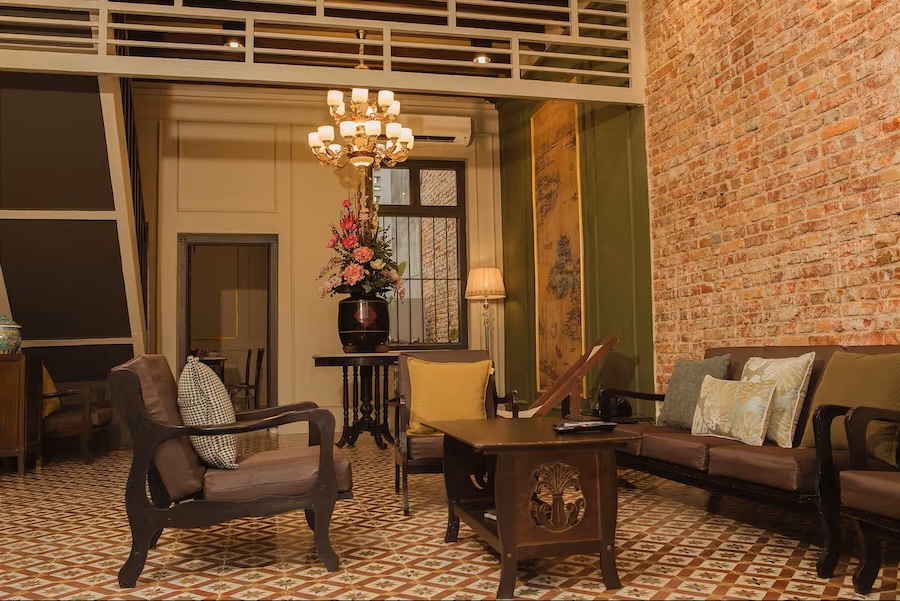
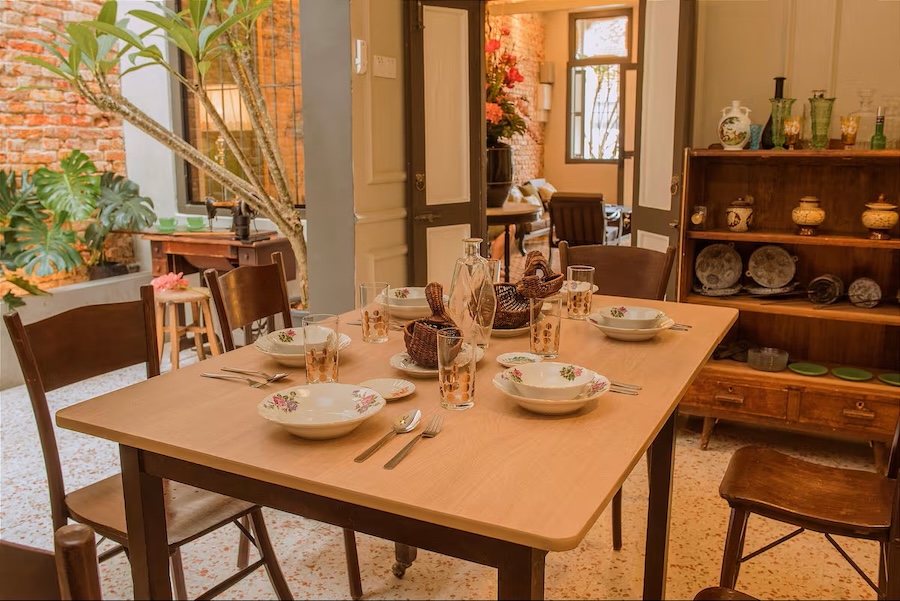
Few places embody Malaysia’s layered past as vividly as Melaka. Within its UNESCO-listed streets, restored shophouses and heritage homes tell stories of trade, migration, and cultural exchange that shaped the Straits Settlements. Century-old shophouses along historic lanes retain original timber beams, airwells, and spatial layouts that once balanced tropical living with commerce. Nearby, Peranakan residences reflect the refined lifestyles of the Straits Chinese, where Chinese craftsmanship, Malay influences, and European aesthetics converge in ornate tiles, carved screens, and carefully proportioned interiors. These homes are not frozen in time, but thoughtfully adapted to modern living while preserving their cultural soul.
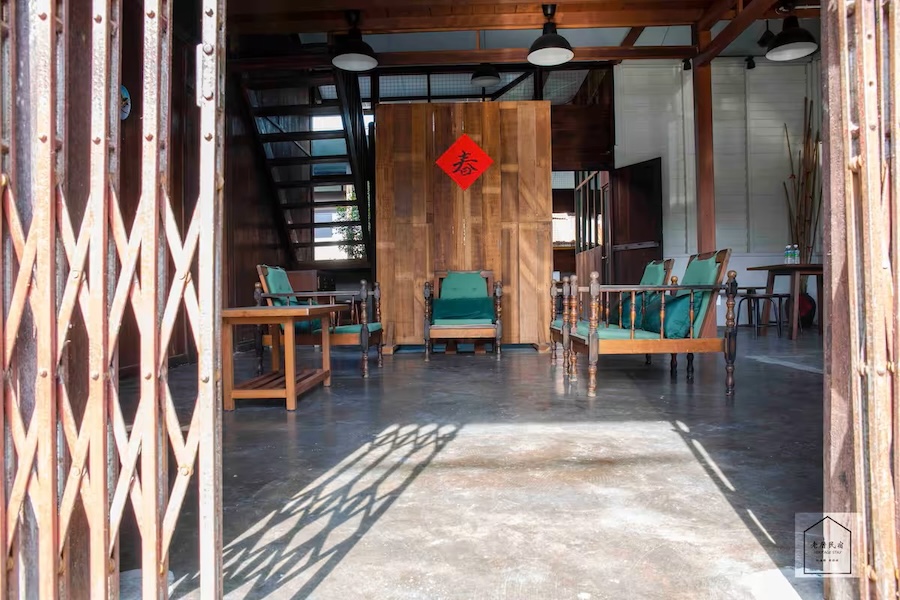
Beyond the cities, traditional kampung houses offer insight into a slower, community-centred way of life that has shaped generations. In villages such as Kampong Baru Jenjarom, wooden homes built decades ago continue to stand as examples of climate-responsive architecture, with raised floors, open layouts, and natural ventilation. Retaining original furnishings and layouts, these houses allow visitors to experience how design once responded intuitively to environment, family life, and social interaction, offering a rare sense of continuity in a fast-changing world.
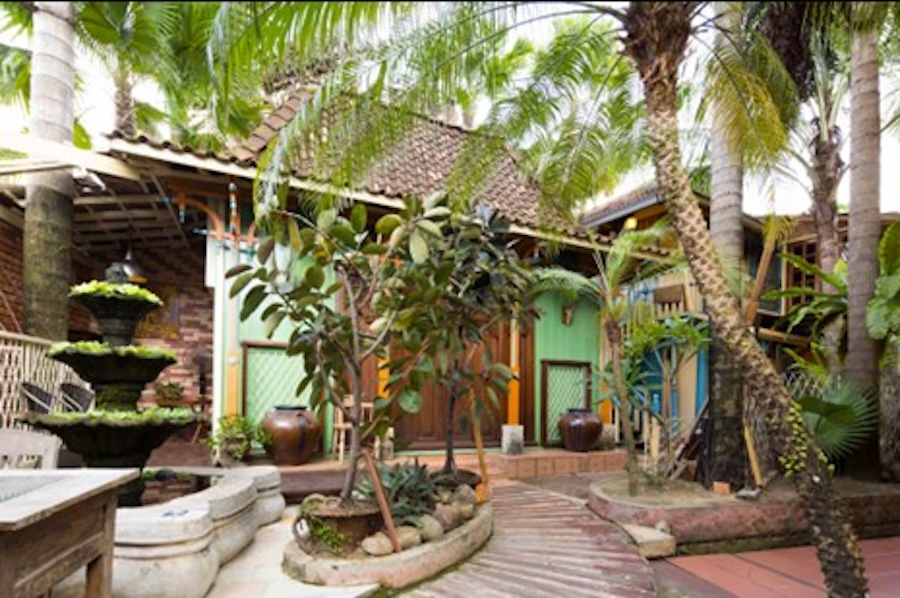
Even in the heart of Kuala Lumpur, heritage architecture continues to endure. Restored wooden houses tucked within the city serve as reminders that urban progress and cultural preservation need not be at odds. Family-led restoration efforts have transformed these homes into tranquil sanctuaries, where carved windows, timber walls, and shaded gardens coexist with the surrounding skyline. They stand as quiet statements about the value of memory, craftsmanship, and identity in an evolving metropolis.