



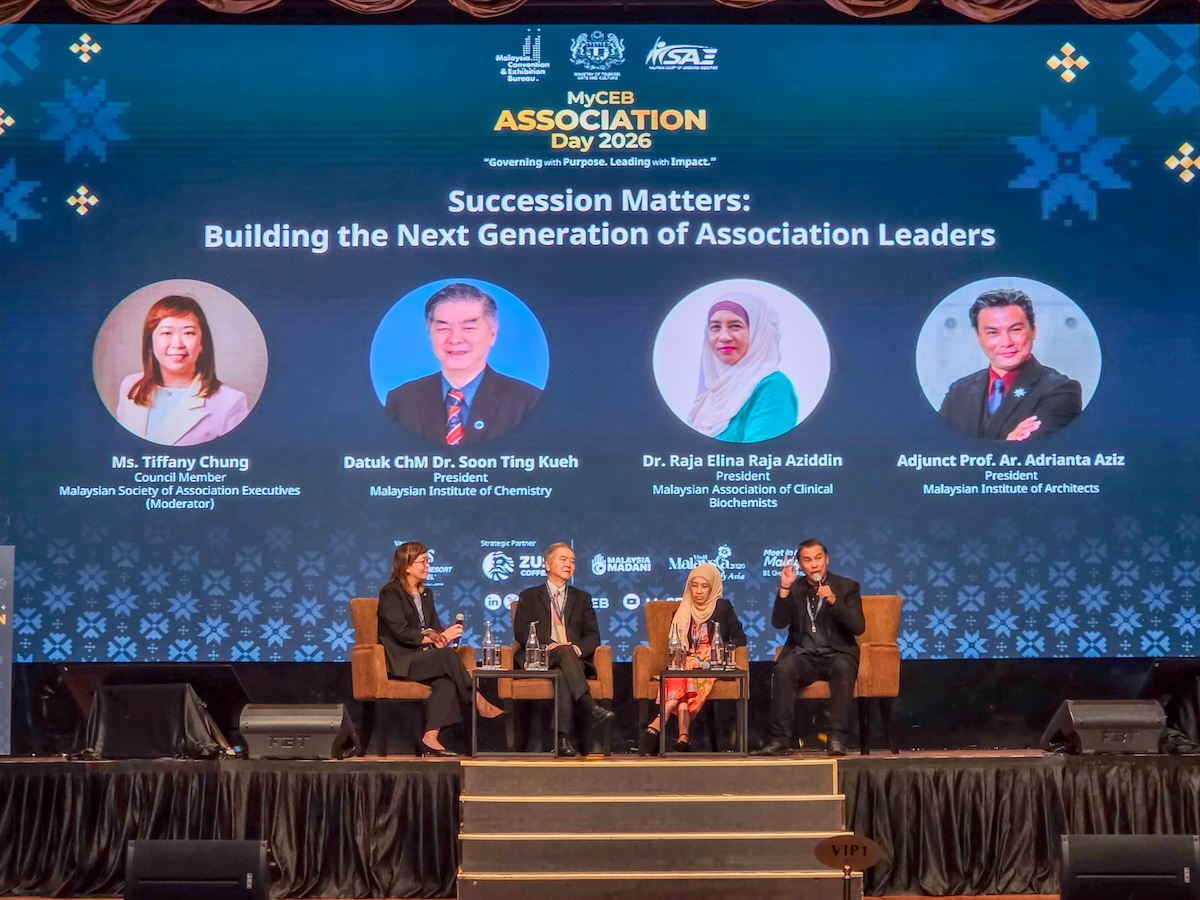
The session on succession planning and leadership continuity sparked a timely and honest conversation on one of the biggest challenges facing associations today which is preparing the next generation of leaders.
Moderated by Ms Tiffany Chung, Council Member of Malaysian Society of Association Executives (MSAE) with an engaging and reflective tone, the discussion opened with a simple yet revealing question to the audience: How many associations have a succession plan in place? With only a handful of responses from the floor, the session immediately highlighted a growing concern across many professional bodies.
The panel agreed that succession planning is no longer just about replacing outgoing leaders. It is about ensuring sustainability, maintaining relevance, and safeguarding the long-term future of associations in an increasingly fast changing environment. Representatives from several professional bodies shared how their organisations are actively nurturing future leaders through youth engagement, mentorship, leadership exposure, and structured participation within committees and working groups.
Succession Planning is no Longer Optional, But is an Essential
Key Takeaways from the Panel Session

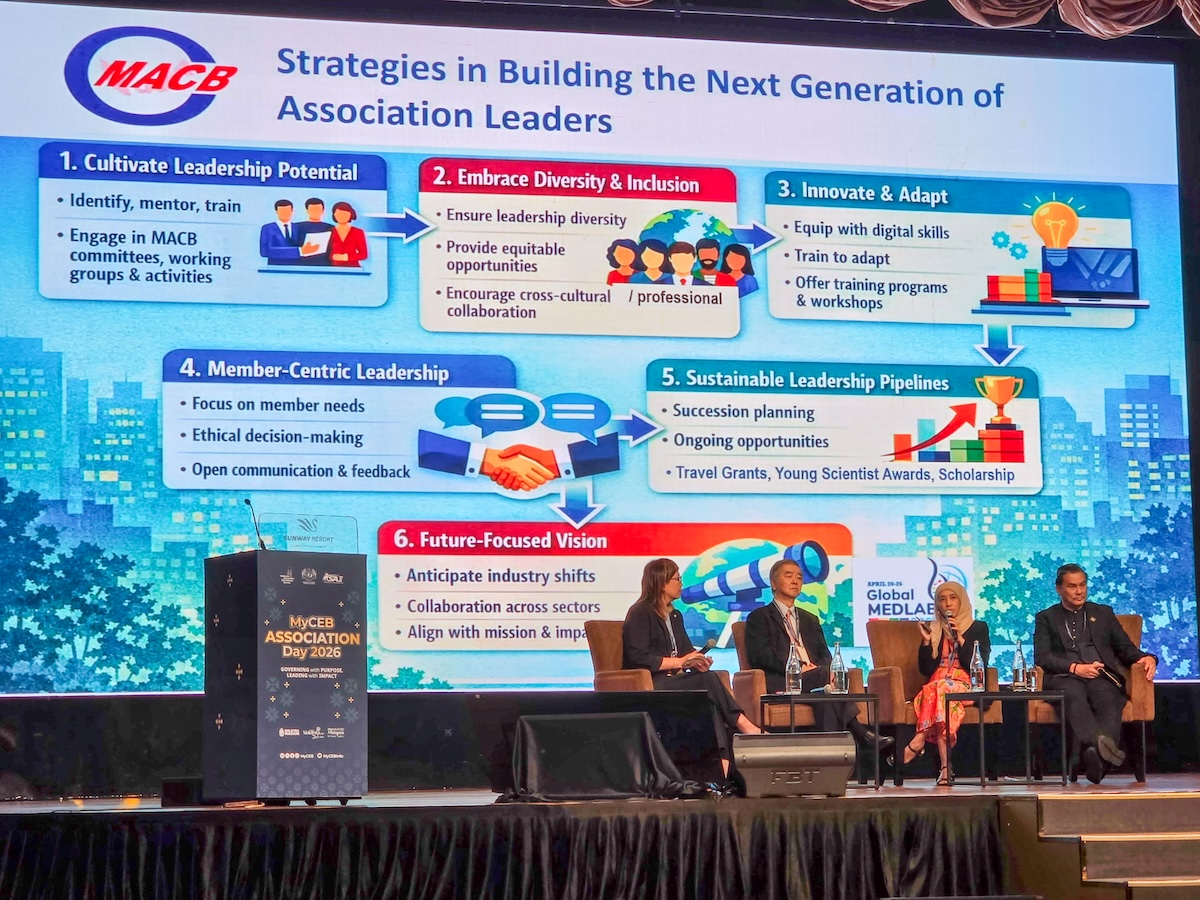
President of the Malaysian Association of Clinical Biochemists, Dr Raja Elina Raja Aziddin,
also highlighted the importance of leadership continuity, particularly within highly specialised fields such as laboratory medicine. She emphasised the need to preserve expertise, strengthen professional networks, and ensure the delivery of accurate and up to date practices within the healthcare ecosystem.
The association’s approach focuses on identifying leadership potential early by involving younger members in task forces, committees, and international collaborations. Mentorship, diversity in representation, and empowering younger professionals to take ownership of projects were identified as key strategies in building confidence and readiness among future leaders.
The discussion also explored how leadership expectations among younger professionals are evolving.
Key Takeaways:
- Leadership continuity is critical in specialised professions.
- Future leaders should be identified through participation and contribution.
- Diversity across age groups and professional backgrounds strengthens leadership.
- Empowering younger members builds confidence and leadership readiness.
President of the Malaysian Institute of Chemistry, Datuk ChM Dr Soon Ting Kueh,
shared how the organisation, established in 1967, has steadily grown into one of Malaysia’s leading scientific professional bodies with more than 6,000 members today. As part of its succession strategy, the institute introduced the Malaysian Young Chemists Network in 2018 to cultivate future leaders below the age of 45.
According to Dr Soon, younger members are actively encouraged to organise programmes, participate in committees, and contribute ideas while receiving guidance and mentorship from senior members. However, he also acknowledged that attracting younger professionals into leadership positions remains a challenge despite the organisation’s steady growth.
Key Takaways:
- Succession planning must start early and be developed progressively.
- Young professionals need opportunities for ownership and active participation.
- Mentorship and generational collaboration are essential for leadership continuity.
- Engagement with universities and student communities helps sustain future talent.
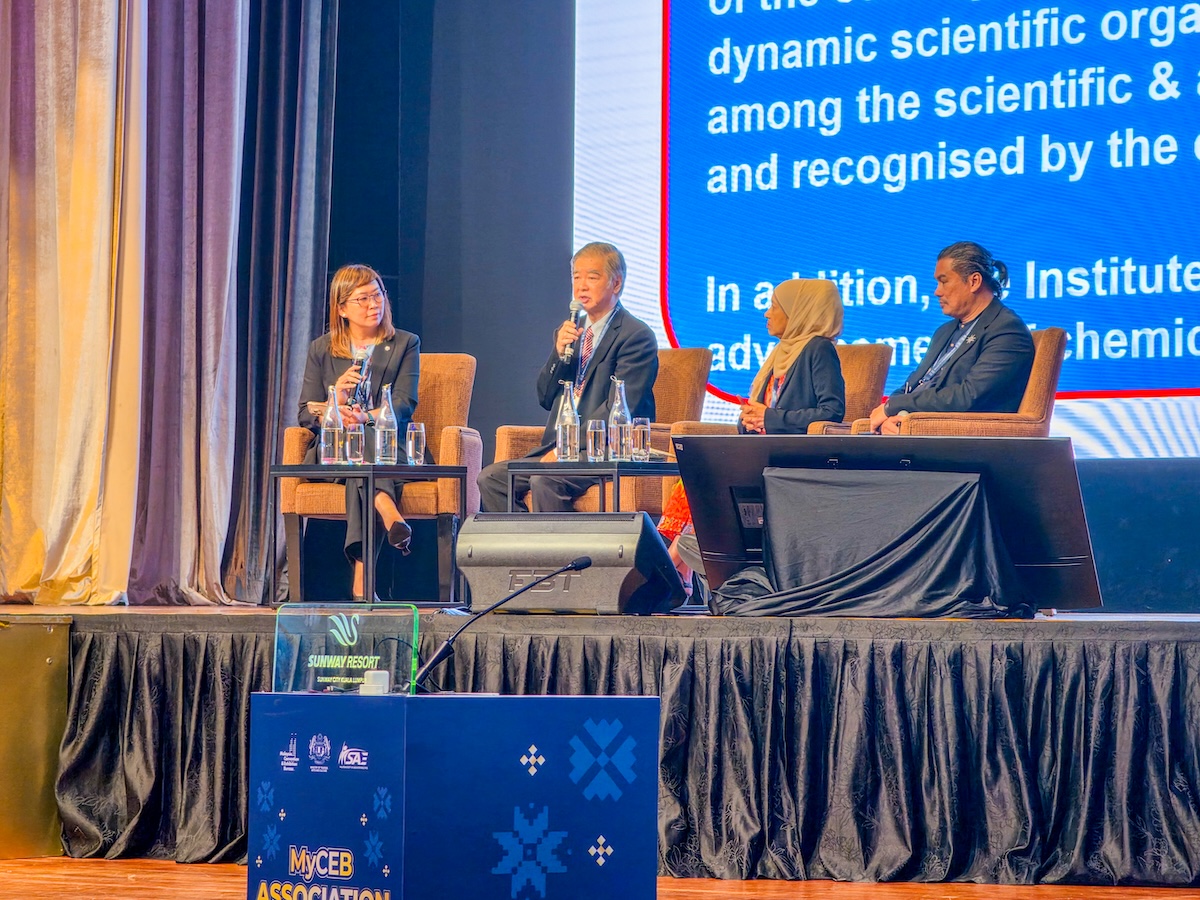
President of the Malaysian Institute of Chemistry, Datuk ChM Dr Soon Ting Kueh,
shared how the organisation, established in 1967, has steadily grown into one of Malaysia’s leading scientific professional bodies with more than 6,000 members today. As part of its succession strategy, the institute introduced the Malaysian Young Chemists Network in 2018 to cultivate future leaders below the age of 45.
According to Dr Soon, younger members are actively encouraged to organise programmes, participate in committees, and contribute ideas while receiving guidance and mentorship from senior members. However, he also acknowledged that attracting younger professionals into leadership positions remains a challenge despite the organisation’s steady growth.
Key Takaways:
- Succession planning must start early and be developed progressively.
- Young professionals need opportunities for ownership and active participation.
- Mentorship and generational collaboration are essential for leadership continuity.
- Engagement with universities and student communities helps sustain future talent.

Immediate Past President of the Malaysian Institute of Architects, Adjunct Prof. Ar. Adrianta Aziz,
shared how mentorship and exposure have always been central to leadership development within the architectural profession.
With more than a century of history, the institute continues to invest heavily in young architects through mentorship programmes, industry seminars, student engagement initiatives, and continuous professional development activities. Leadership, according to the panel, is no longer defined by authority or hierarchy alone, but by the ability to inspire, collaborate, and contribute meaningfully to society.
One recurring theme throughout the session was the importance of giving younger professionals not just opportunities but also trust and responsibility. Panelists agreed that younger generations bring different perspectives, digital fluency, and new ways of working that associations must learn to embrace rather than resist.
The session also acknowledged the reality that younger professionals today balance many competing priorities, including career growth, family commitments, and evolving industry demands. As such, associations must become more flexible, inclusive, and purposeful in how they engage future leaders.
Closing the session, the moderator emphasised that leadership development cannot happen in isolation. Building a future ready leadership pipeline requires collaboration between associations, industry players, government agencies, academic institutions, and the wider professional ecosystem.
Ultimately, the conversation reinforced a shared understanding that succession planning is not simply about preparing the next president or council member. It is about shaping resilient, future ready associations capable of adapting, evolving, and continuing to serve their industries and communities for generations to come.
“If have nothing, it is about passionate
If you have everything, it is about attitude
Key Takeaways:
- Leadership is built through long-term experience, mentorship, and service.
- Purpose-driven leadership inspires younger generations.
- Young professionals need both structure and inspiration to grow.
- Strong leadership culture must be nurtured across all levels of the organisation

Overall Session Takeaway
The panel collectively agreed that succession planning is no longer optional, but essential to ensuring the long-term sustainability, relevance, and resilience of associations.
Key priorities for future-ready leadership include:
- Early engagement and development of young professionals
- Strong mentorship and continuous knowledge transfer
- Opportunities for leadership, ownership, and decision-making
- Openness to innovation, fresh perspectives, and digital transformation
- Greater collaboration between associations, industry, academia, and government
Ultimately, the session reinforced that building future leaders is about creating organisations that remain adaptive, impactful, and prepared for the future.
