



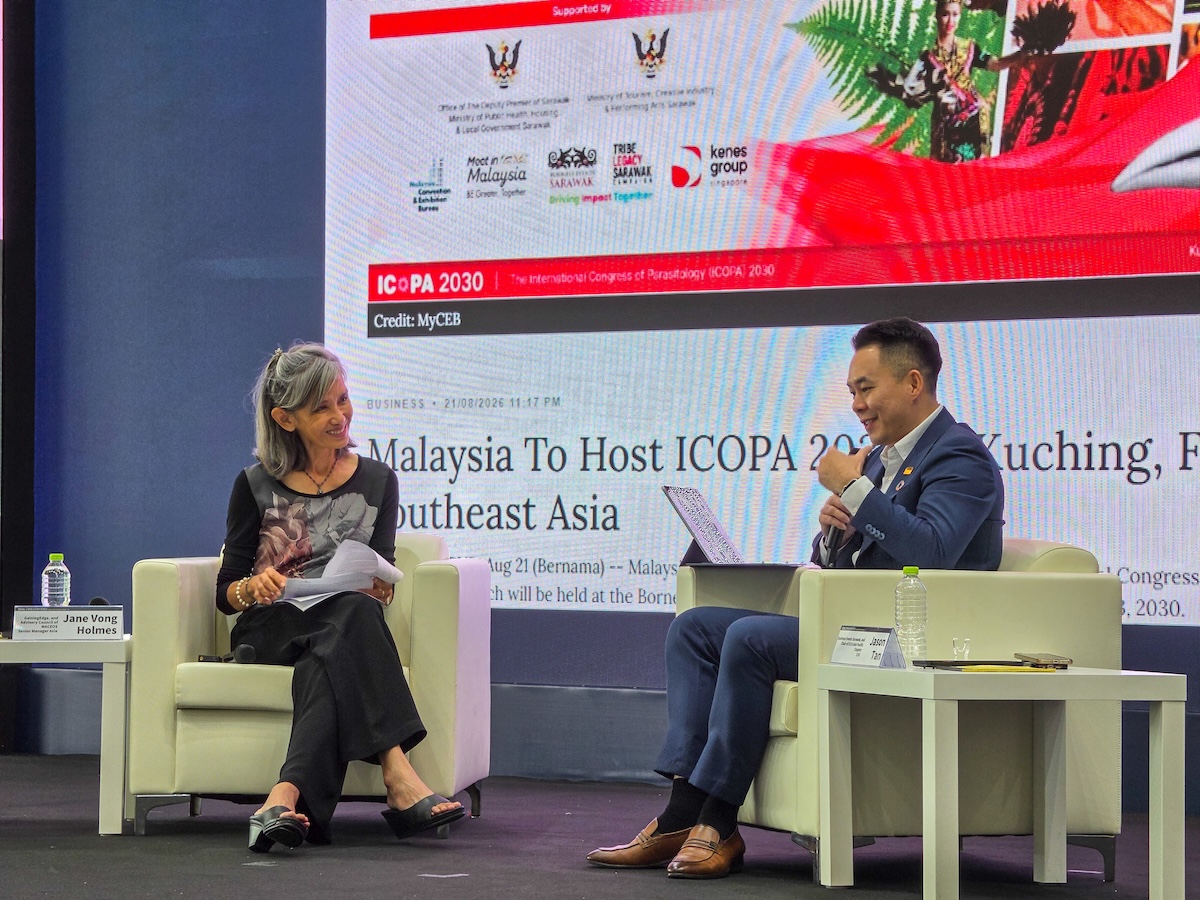
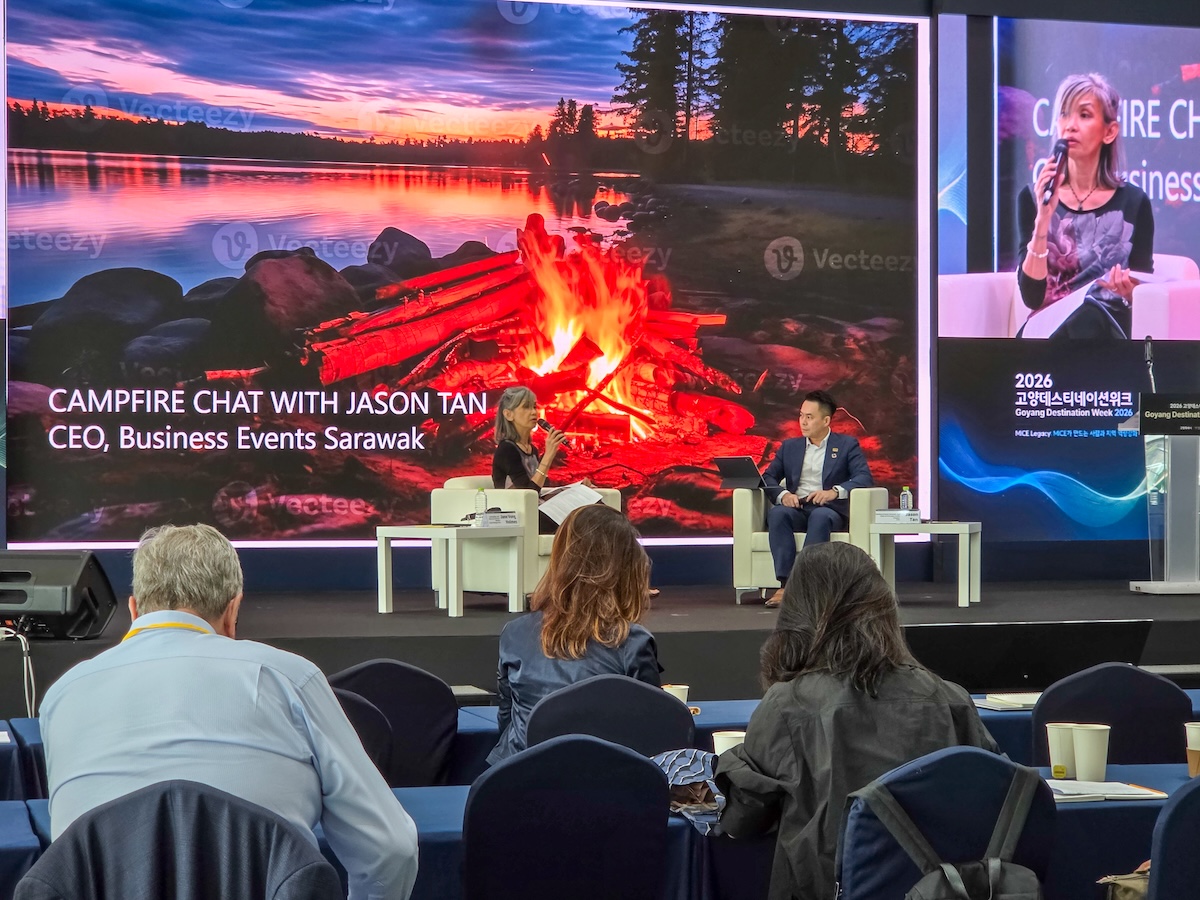
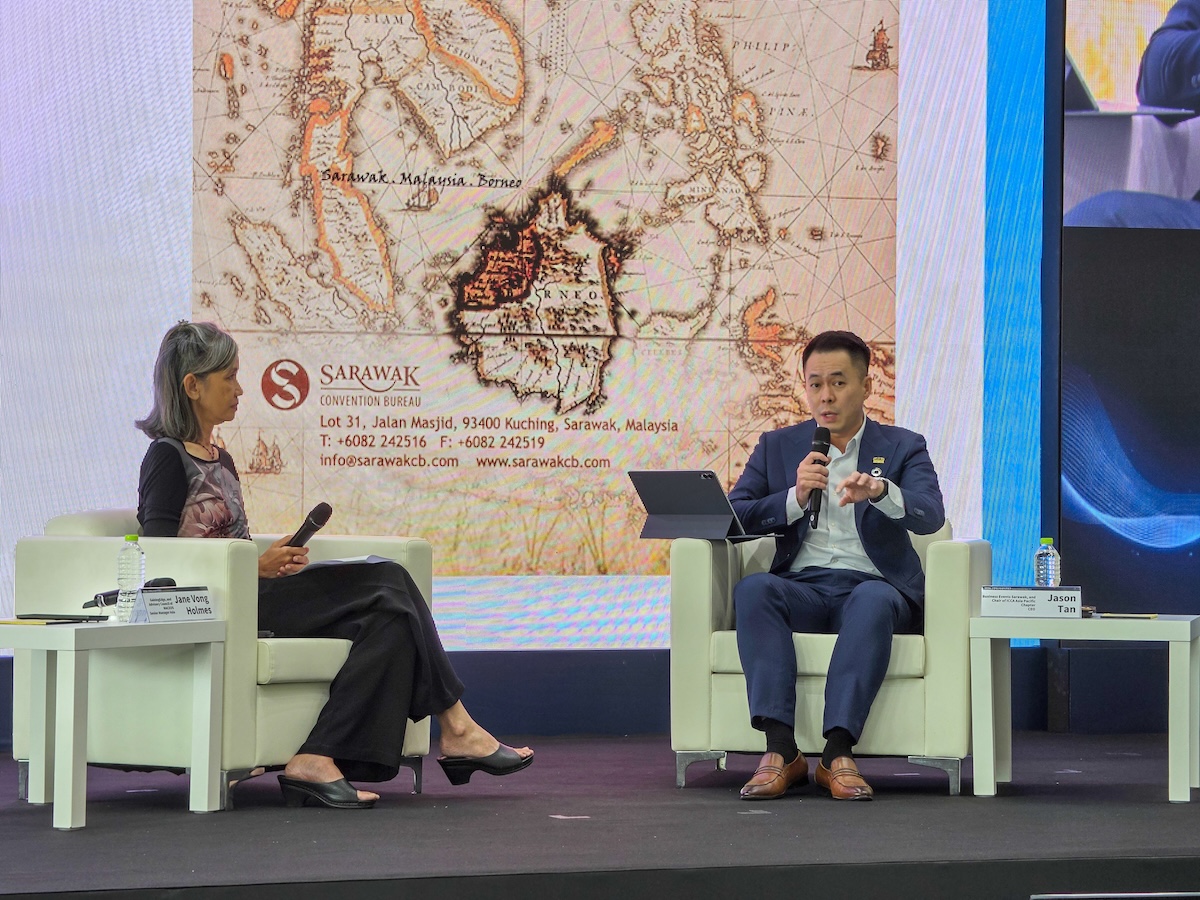
During Goyang Destination Week 2026 (GDW2026), GainingEdge’s Jane Vong sat down with Jason Tan, CEO of Business Events Sarawak (BESarawak) and Chair of ICCA Asia Pacific, to explore how Sarawak evolved from an emerging destination into one of Asia’s strongest advocates for legacy-driven business events.
The Eight Turning Points from Jane Vong Holmes’ conversation with Jason Tan
Building Beyond Events,
Creating Lasting Impact
Vision Comes Before Infrastructure
Jane opened by pointing out an often-overlooked fact: BESarawak was established in 2006, while the Borneo Convention Centre Kuching (BCCK) only opened three years later.
“ Sarawak actually started building the business events industry before the state even had a purpose-built venue.
Jason said the decision reflected the foresight of Sarawak’s leaders, who understood that, long before the convention centre opened, a successful destination is built on relationships, strategy and confidence, not just infrastructure. He credited former BESarawak leaders Jill Henry, Mike Cannon and Amelia Roziman for shaping Sarawak’s sustainable business events journey.
The Campaign That Put Sarawak on the Map
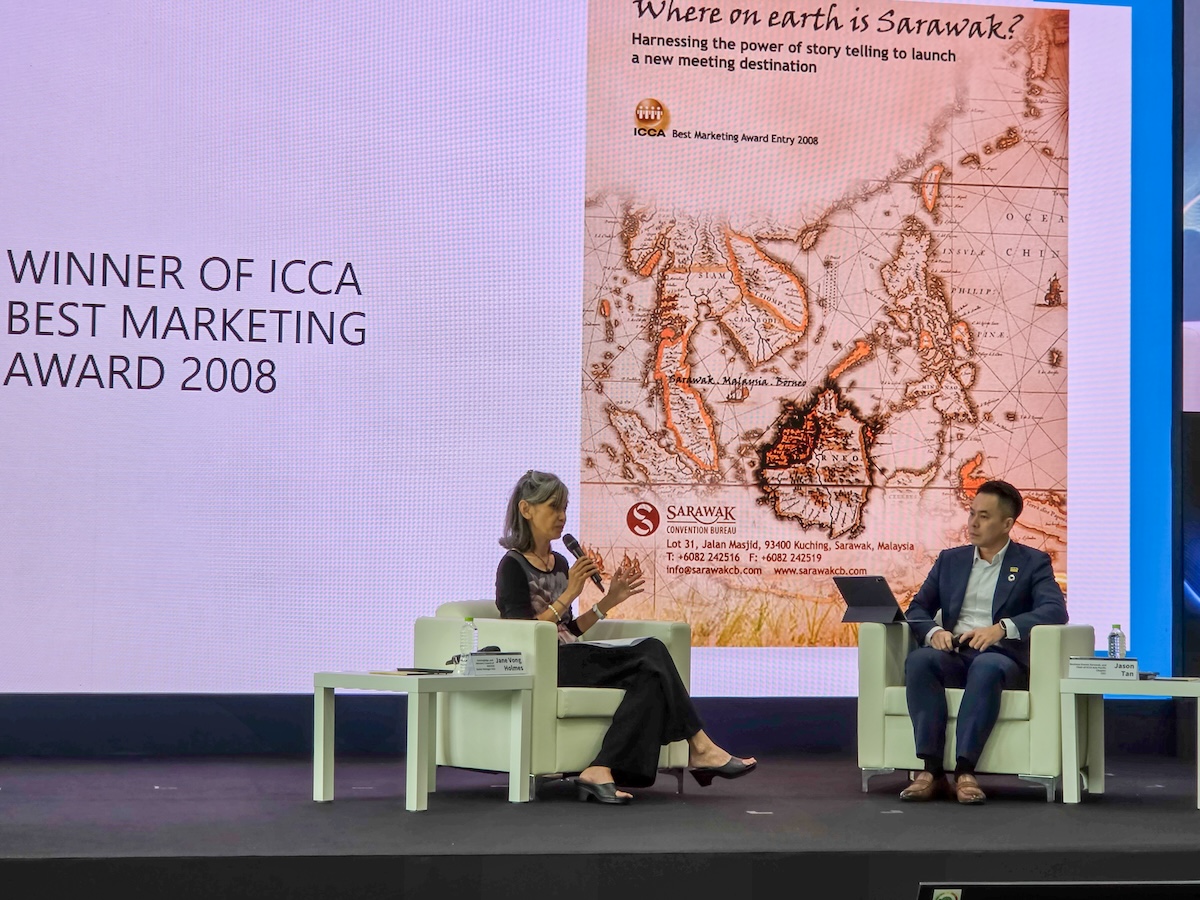
A defining milestone came in 2008, when Sarawak became the first Asian convention bureau to win the ICCA Best Marketing Award for “Harnessing the Power of Storytelling to Launch a New Meetings Destination.”
Rather than assuming people already knew the destination, the campaign tackled the obvious question head-on.
“Back then, our biggest challenge was very simple, people didn’t know where Sarawak was.”
Located in East Malaysia on the island of Borneo alongside Sabah, Brunei and Indonesia’s Kalimantan, Sarawak first had to establish its identity before it could compete internationally.
Today, Jason believes that conversation has evolved.
“ We’ve moved from asking ‘Where on Earth is Sarawak?’ to showing what Sarawak can contribute through business events.
The Campaign That Put Sarawak on the Map
A defining milestone came in 2008, when Sarawak became the first Asian convention bureau to win the ICCA Best Marketing Award for “Harnessing the Power of Storytelling to Launch a New Meetings Destination.”
Rather than assuming people already knew the destination, the campaign tackled the obvious question head-on.
“Back then, our biggest challenge was very simple, people didn’t know where Sarawak was.”
Located in East Malaysia on the island of Borneo alongside Sabah, Brunei and Indonesia’s Kalimantan, Sarawak first had to establish its identity before it could compete internationally.
Today, Jason believes that conversation has evolved.
“ We’ve moved from asking ‘Where on Earth is Sarawak?’ to showing what Sarawak can contribute through business events.
Language Shapes Perception
Another important shift was in language.
“We don’t use the term ‘secondary city’ anymore.”
Instead, Sarawak positions Kuching as a non-capital city, one defined by its own strengths rather than comparison with Kuala Lumpur.
For Jason, changing the narrative helps reshape perceptions and strengthens the destination’s positioning when competing for international events.
“ Kuching is not a secondary city. It is a non-capital city defined by its own strengths, expertise and identity.
Language Shapes Perception
Another important shift was in language.
“We don’t use the term ‘secondary city’ anymore.”
Instead, Sarawak positions Kuching as a non-capital city, one defined by its own strengths rather than comparison with Kuala Lumpur.
For Jason, changing the narrative helps reshape perceptions and strengthens the destination’s positioning when competing for international events.
“ Kuching is not a secondary city. It is a non-capital city defined by its own strengths, expertise and identity.
Turning Connectivity into an Opportunity
Air connectivity remains one of the first questions organisers ask, and Jane put it directly to Jason.
Rather than seeing connectivity as a limitation, Jason argued that different business events have different priorities.
“Corporate meetings can be very sensitive to connectivity. Association delegates often travel differently.”
While AirBorneo reflects Sarawak’s commitment to improving regional connections, Jason believes understanding delegate behaviour has been equally important. The destination learned that while convenience matters, compelling content, strong local expertise and memorable experiences often outweigh the absence of a direct flight.
Tourism and Business Events Are Stronger Together
Business events bring visitors who stay longer, explore more and spend across the destination.
Business events certainly bring visitors who stay in hotels, explore the destination and support local businesses. But Jason argued that their true value extends much further through:
- knowledge transfer
- innovation
- human capital development
- social impact
- environmental outcomes
Together, these benefits create a broader ecosystem that supports long-term destination development.
“ Tourism and business events aren’t competitors, they complement each other.
Communities Become Your Strongest Ambassadors
One story from the 2016 ICCA Congress in Kuching captured Sarawak’s community spirit better than any statistic.
Jane recalled how even taxi drivers recognised ICCA delegates, a small moment that reflected something much bigger than hospitality. It showed how deeply the local community had embraced the event.
Jason believes smaller destinations have a unique advantage.
From local businesses recognising delegate badges to community social media platforms sharing industry news, Sarawak has worked to make business events visible beyond the convention hall.
For Jane, that kind of community buy-in creates something every destination needs: social licence.
“People know each other, so it’s easier to bring everyone together.
Communities Become Your Strongest Ambassadors
One story from the 2016 ICCA Congress in Kuching captured Sarawak’s community spirit better than any statistic.
Jane recalled how even taxi drivers recognised ICCA delegates, a small moment that reflected something much bigger than hospitality. It showed how deeply the local community had embraced the event.
Jason believes smaller destinations have a unique advantage.
From local businesses recognising delegate badges to community social media platforms sharing industry news, Sarawak has worked to make business events visible beyond the convention hall.
For Jane, that kind of community buy-in creates something every destination needs: social licence.
“ We don’t treat them as competitors. They complement each other.
Win the Conferences That Match Your Expertise
When Jane asked how Sarawak competes with destinations like Kuala Lumpur and Penang, Jason rejected the idea of competing on size alone.
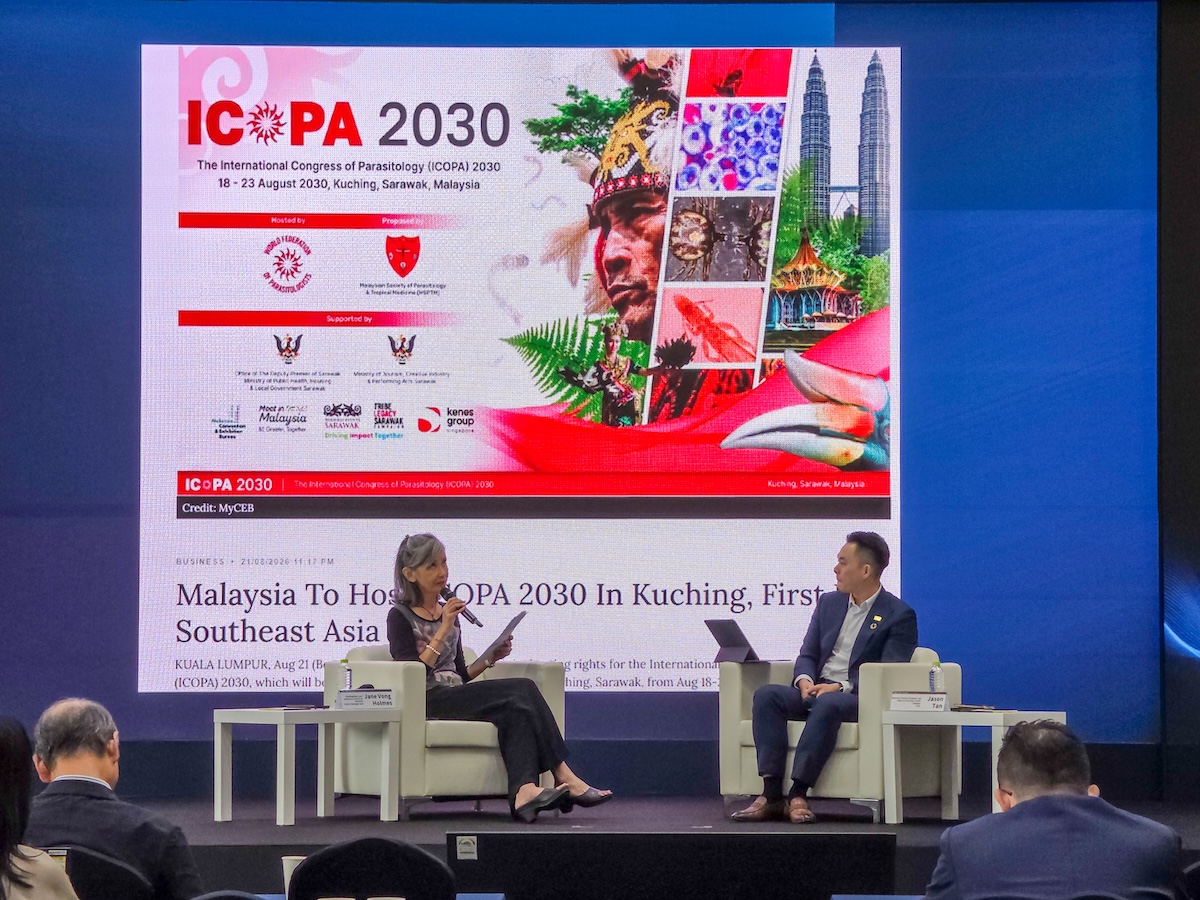
Instead, he pointed to the World Congress of Parasitology 2030.
Rather than building the bid around venue capacity, Sarawak leveraged its internationally recognised expertise in malaria and parasitology research, including work led by researchers at Universiti Malaysia Sarawak.
Earlier successes, including conferences on tropical medicine, helped strengthen Sarawak’s credibility and laid the groundwork for securing one of the field’s most prestigious global congresses
For Jason, destination knowledge has become just as important as destination infrastructure.
“ Before you bid, ask: Who are the experts in your city?
When Legacy Became the Strategy
Perhaps Sarawak’s biggest turning point came in 2019, when it deliberately positioned legacy and impact as central to its business events strategy.
Having already developed economic impact studies and measurement tools, BESarawak challenged itself to think beyond traditional metrics.
“Should we only measure success through numbers?”
That question reshaped how the destination defines success. Today, business events are valued not only for hotel nights and delegate spending, but also for:
knowledge transfer and research collaboration
innovation
community engagement
industry development
long-term societal benefits
“Legacy isn’t something you achieve once. It’s something you continue building.
When Legacy Became the Strategy
Perhaps Sarawak’s biggest turning point came in 2019, when it deliberately positioned legacy and impact as central to its business events strategy.
Having already developed economic impact studies and measurement tools, BESarawak challenged itself to think beyond traditional metrics.
“Should we only measure success through numbers?”
That question reshaped how the destination defines success. Today, business events are valued not only for hotel nights and delegate spending, but also for:
knowledge transfer and research collaboration
innovation
community engagement
industry development
long-term societal benefits
“Legacy isn’t something you achieve once. It’s something you continue building.
Final Word: The One Thing That Changed Everything
As the conversation drew to a close, Jane posed one final question.
If you had to choose just one game changer over the past twenty years, what would it be?
Jason answered without hesitation.
“Government recognition.
Government recognition is the game changer.
For Jason, government support is the foundation that enables every other part of the ecosystem to work, from destination branding and connectivity to legacy programmes and international bidding.
When governments recognise business events as drivers of knowledge, innovation and destination development, not just tourism revenue, they create the conditions for lasting growth.Sarawak’s journey wasn’t about becoming another capital city or building the biggest venue. It was about understanding its own strengths, telling its story with confidence and creating value that continues long after delegates have returned home.