



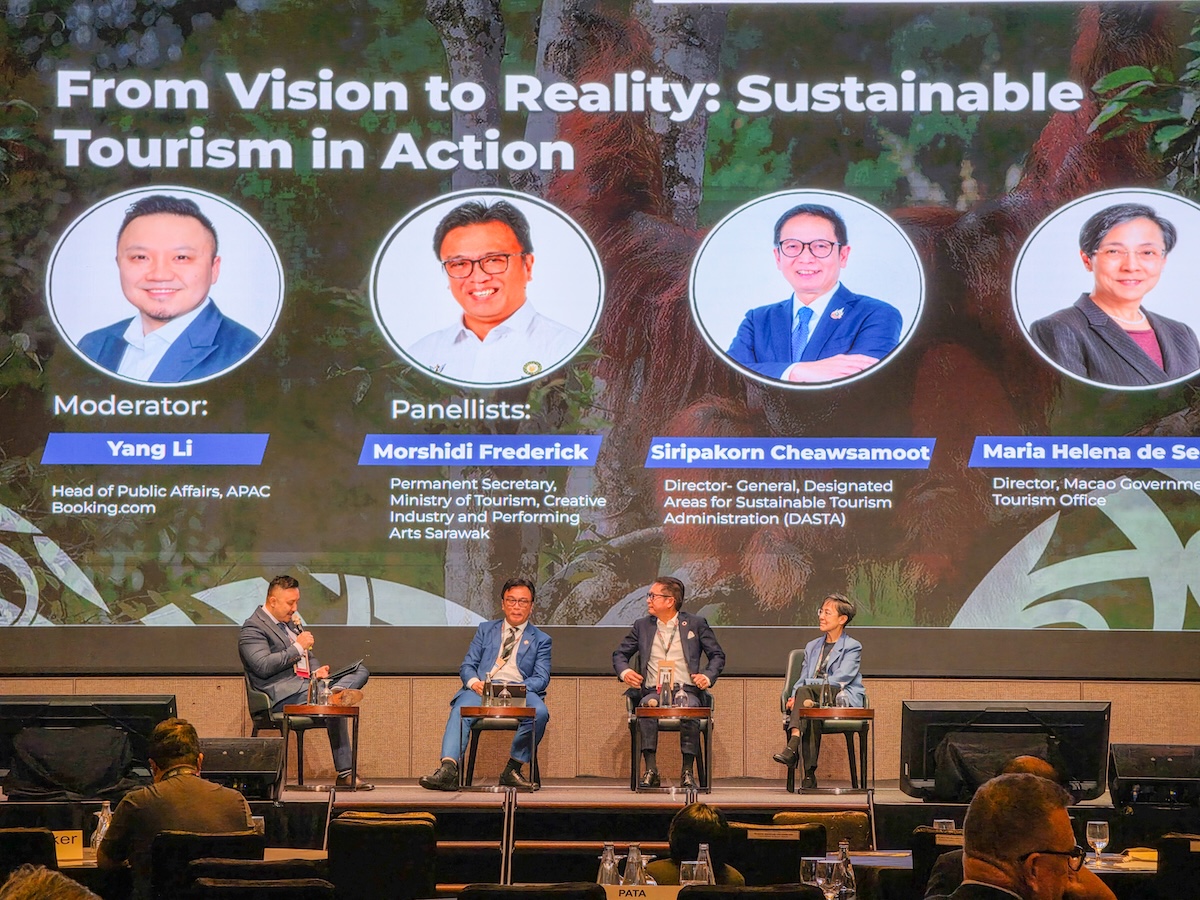
What if the success of a destination was measured by more than the number of visitors it attracts?
That question shaped the From Vision to Reality: Sustainable Tourism in Action session at PATA Travel Mart, moderated by Yang Li, Head of Public Affairs, APAC, Booking.com.
Bringing together tourism leaders from Sarawak, Thailand and Macao, the session explored how destinations are turning sustainability from a policy ambition into practical action, balancing tourism growth with community well-being, cultural preservation, environmental stewardship and visitor experience.
Rethinking tourism for a sustainable future
Sarawak: Growing with Purpose
For Sarawak, sustainable tourism is about leaving the destination better.
Morshidi Fredrick, Permanent Secretary, Ministry of Tourism, Culture and Performing Arts, Sarawak, highlighted the state’s ambition to position Sarawak as the Gateway to Borneo, supported by stronger connectivity and a focus on encouraging visitors to stay longer and explore beyond the main gateways.
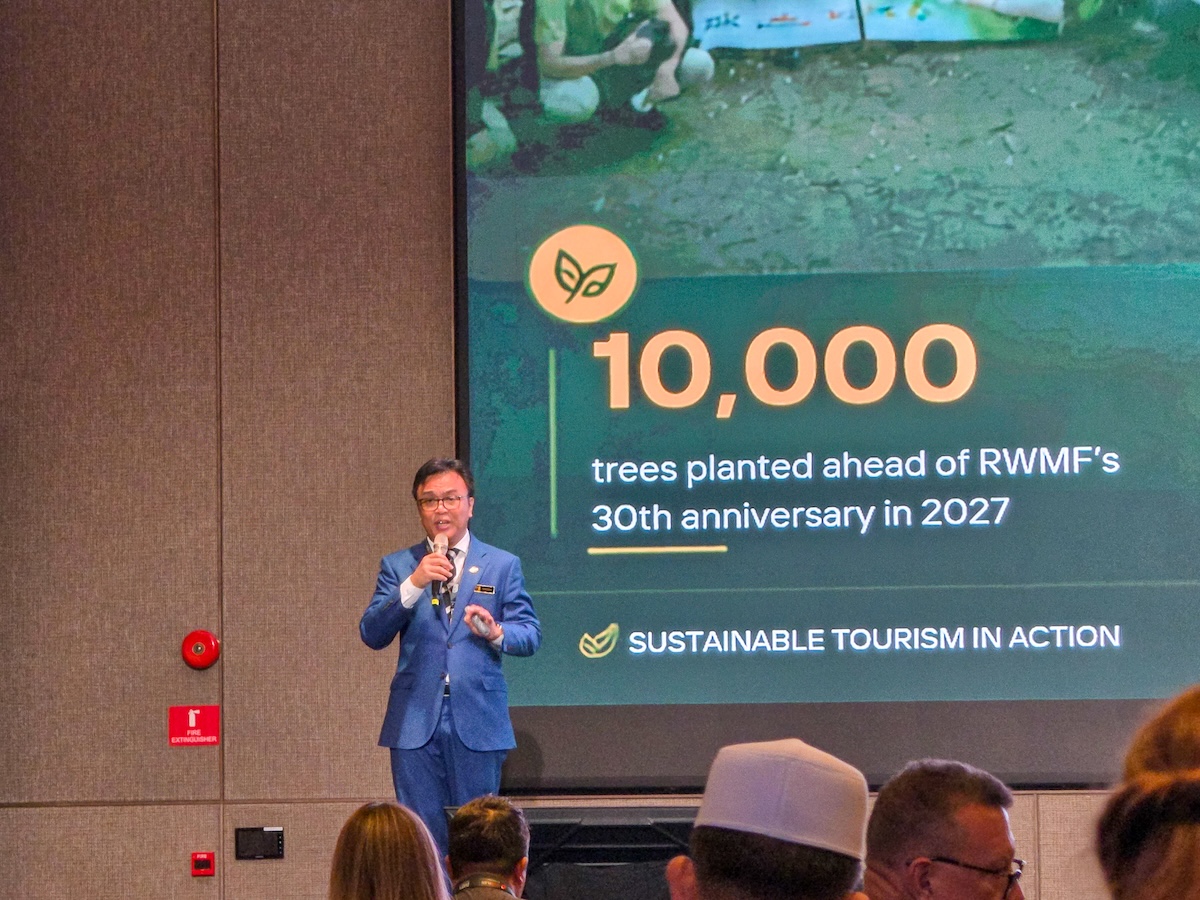
The Rainforest World Music Festival demonstrates how tourism, culture and conservation can work together. The festival brings indigenous and international artists together while creating opportunities for visitors to experience Sarawak’s culture, food, communities and natural environment.
A portion of ticket revenue is also channelled towards mangrove restoration, turning an international event into a platform for environmental action.
Tourism, in this sense, becomes more than visitation, it becomes a way to create lasting connections and ambassadors for the destination.
Thailand: Putting Communities at the Centre
For Thailand, sustainability starts with the people who call a destination home.
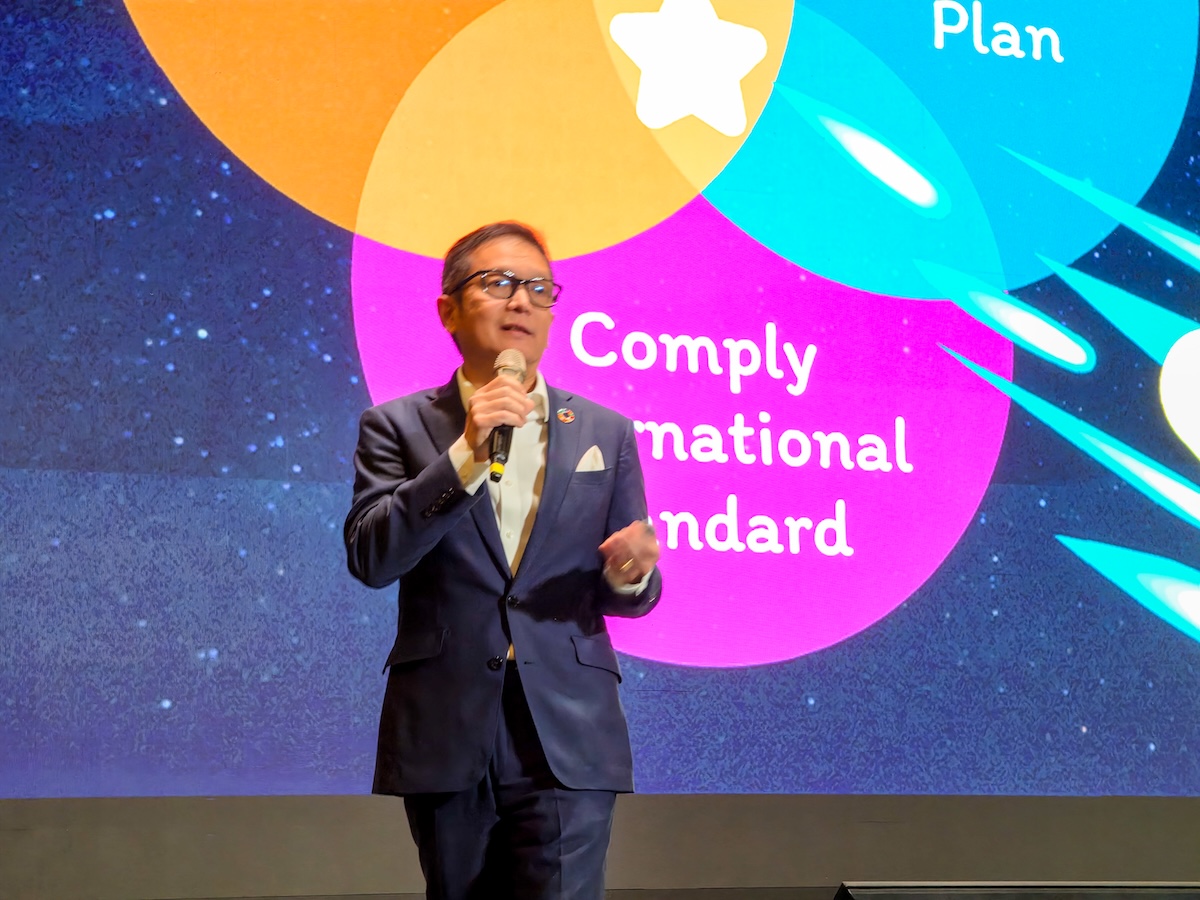
Siripakorn Cheawsamoot, Director-General of the Designated Areas for Sustainable Tourism Administration (DASTA), outlined an approach centred on community benefits, infrastructure, international standards and cross-sector collaboration.
But beyond tourism revenue and visitor satisfaction, he highlighted another important measure: the next generation.
For community-based tourism to remain sustainable, young people need meaningful opportunities to return to their hometowns and participate in local tourism development.
In this context, creating new tourism jobs is not simply about employment.
It is about giving the next generation a reason to come home.
Macao: Making Growth Smarter
For Macao, the challenge lies in managing tourism growth while ensuring that the city remains a good place to live as well as visit.
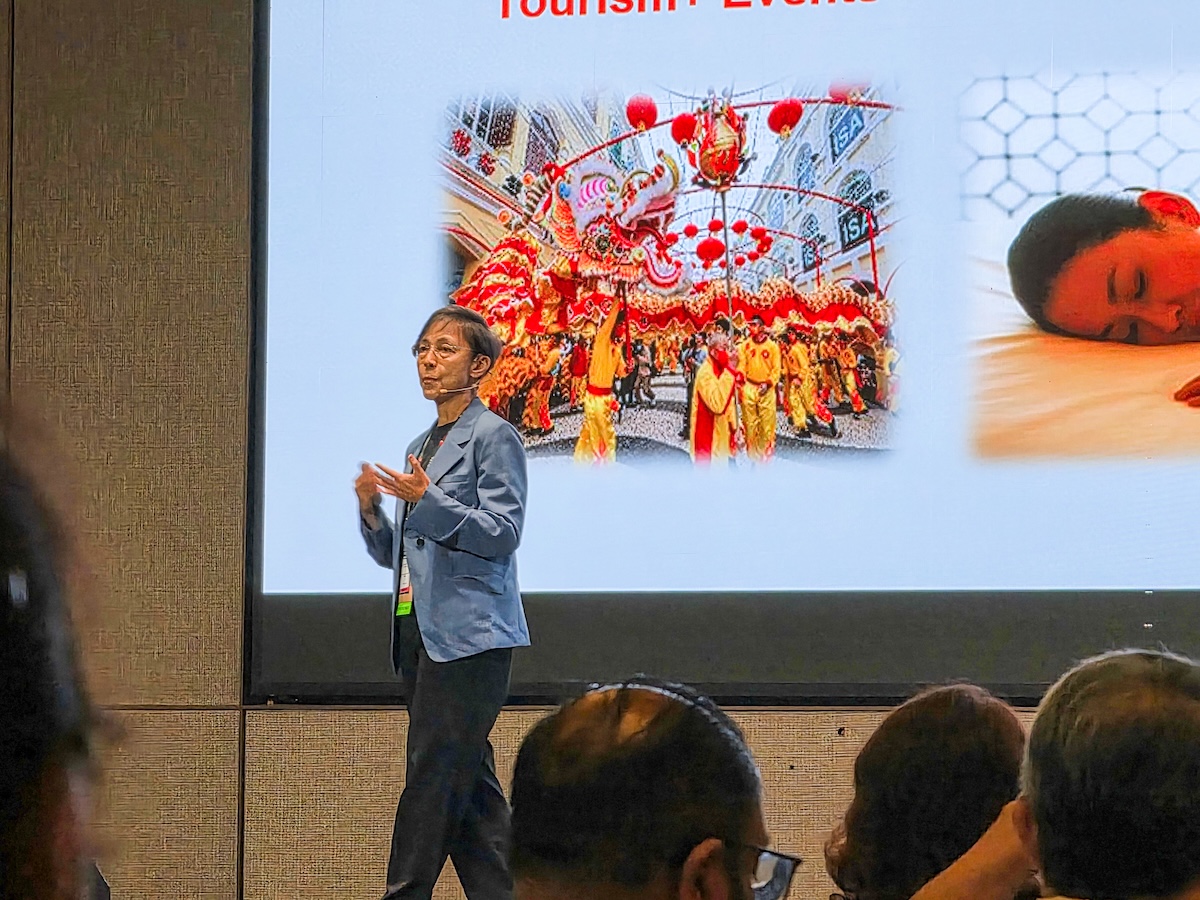
Maria Helena de Senna Fernandes, Director of the Macao Government Tourism Office, shared Macao’s “Tourism Plus”strategy, which connects tourism with culture, creativity, sports, MICE, wellness, gastronomy and technology.
Technology is also helping Macao manage visitor flows. Smart applications provide information on crowd densities, allowing travellers to adjust their itineraries and explore less congested areas.
At the same time, efforts to revitalise older districts, preserve intangible cultural heritage and promote greener hospitality reinforce the importance of putting communities at the heart of tourism development.
A Different Measure of Success
While Sarawak, Thailand and Macao face very different tourism challenges, their approaches share a common message: sustainable tourism is no longer simply about attracting more visitors.
It is about creating better experiences, stronger communities and more resilient destinations.
The future of tourism may therefore not be measured by how fast destinations grow, but by how well, how inclusively and how purposefully they grow.
Because the best destination is not simply one that people want to visit, it is one where people also want to live, return to and belong.