



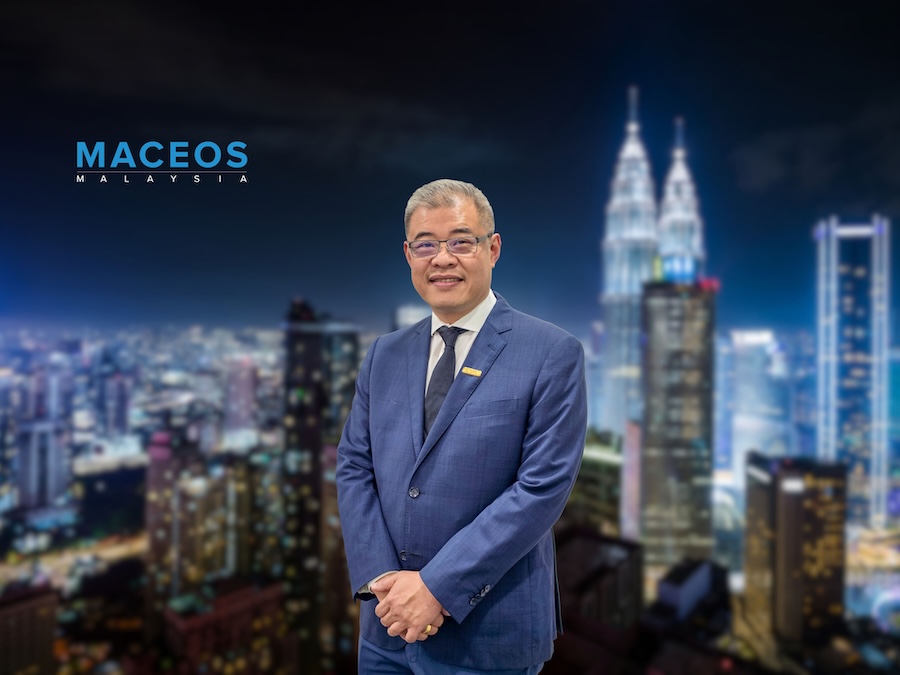
With Budget 2027 approaching, the industry wants business events to play a bigger role in driving trade, investment, talent and Malaysia’s regional competitiveness.
When a Malaysian SME meets an overseas buyer at a trade fair and secures a new order, the benefit does not stop with that transaction. More production may follow, new jobs can be created, and Malaysian products gain an opportunity to enter new markets.
This is the wider economic value that the business events industry wants the Government to recognise as Budget 2027 approaches.
The Malaysian Association of Convention and Exhibition Organisers and Suppliers (MACEOS) is calling for business events to be given a more prominent place in Malaysia’s economic strategy, arguing that meetings, incentive programmes, conferences and exhibitions can contribute to trade, investment, talent development, knowledge exchange and international business connections.
Budget 2027 will be tabled in Parliament on 9 October 2026. The Government’s Pre-Budget Statement highlights productivity- and innovation-led growth, high-value investment, talent development, export-market diversification and stronger competitiveness among its priorities.


An Industry with a Growing Economic Footprint
There is already evidence of the sector’s economic contribution.
MyCEB reported that it secured 393 business events in 2025, generating an estimated RM4.07 billion in economic impact from international delegates.
The momentum has continued into 2026. Between January and June, MyCEB reported 194 business events hosted, attracting 341,182 delegates and generating RM1.81 billion in estimated economic impact.
As of 30 June 2026, MyCEB had also secured 416 international business events scheduled between 2026 and 2030, representing a projected RM3.98 billion in estimated economic impact.
Cumulatively, MyCEB says it has secured more than 3,575 business events, attracting over 4.5 million delegates and generating an estimated RM26.7 billion in economic impact for Malaysia.
These figures cover MyCEB-supported business events and are not a measurement of the entire Malaysian business events industry. They nevertheless give an indication of the scale of economic activity generated by events secured and hosted through the national convention bureau.
For MACEOS, the next step is to build on that activity and connect it more closely to the country’s wider economic priorities.
An Industry with a Growing Economic Footprint
There is already evidence of the sector’s economic contribution.
MyCEB reported that it secured 393 business events in 2025, generating an estimated RM4.07 billion in economic impact from international delegates.
The momentum has continued into 2026. Between January and June, MyCEB reported 194 business events hosted, attracting 341,182 delegates and generating RM1.81 billion in estimated economic impact.
As of 30 June 2026, MyCEB had also secured 416 international business events scheduled between 2026 and 2030, representing a projected RM3.98 billion in estimated economic impact.
Cumulatively, MyCEB says it has secured more than 3,575 business events, attracting over 4.5 million delegates and generating an estimated RM26.7 billion in economic impact for Malaysia.
These figures cover MyCEB-supported business events and are not a measurement of the entire Malaysian business events industry. They nevertheless give an indication of the scale of economic activity generated by events secured and hosted through the national convention bureau.
For MACEOS, the next step is to build on that activity and connect it more closely to the country’s wider economic priorities.
More Than Tourism
The impact of a business event is often felt well beyond the convention centre or exhibition hall.
An international conference can bring Malaysian professionals into contact with new developments in healthcare, engineering, technology, academia and specialised industries. A trade exhibition can put local companies in front of overseas buyers. Incentive programmes bring international visitors into hotels, restaurants, attractions and other parts of the tourism ecosystem.
Behind the scenes, event organisers also work with transport companies, production companies, contractors, suppliers, venues and professional services providers.
That makes business events an economic activity with links to a wide range of industries.
MACEOS also points to increasing competition from destinations across the region, where business events are being incorporated into wider economic development strategies through measures such as bidding support, talent development and infrastructure investment.
The association believes Malaysia needs a more coordinated public-private approach to ensure it remains competitive.
Five Priorities for Budget 2027
MACEOS’s Budget 2027 submission sets out five strategic priorities for the sector.
1. Winning More International Events
The association is calling for stronger bidding support for local organisers competing to bring major international conventions and exhibitions to Malaysia.
International events are often secured years ahead, and destinations compete heavily to win them. Greater support for the bidding process could help Malaysian organisers compete for events that bring international delegates, buyers, investors and industry expertise into the country.
2. Making the Tax Environment More Competitive
MACEOS is proposing that existing tax incentives be streamlined to make them more accessible to mid-sized organisers.
It is also calling for a review of the Service Tax (SST) treatment of short-term venue and exhibition booth rentals.
The objective is to create a more practical operating environment for organisers while maintaining Malaysia’s competitiveness as an international business events destination.
3. Supporting More Sustainable Events
Sustainability is becoming a bigger consideration when organisers select destinations and venues.
MACEOS is proposing matching grants that would encourage companies to co-invest with the Government in green event technologies, more sustainable practices and environmentally responsible venue operations.
The proposed model would also allow Government funding to encourage greater private-sector investment in sustainability.
4. Strengthening Industry Talent
MACEOS is calling for support for micro, small and medium enterprises (MSMEs) to upskill their workforce through globally recognised professional certifications.
As the industry becomes more international, having people with the right skills and qualifications will be increasingly important to Malaysia’s ability to compete for and deliver major events.
5. Investing in Strategic Infrastructure
The association is also proposing investment in purpose-built convention and exhibition centres capable of hosting mega-scale events, while giving homegrown trade exhibitions more room to expand.
For MACEOS, this is not simply about having more venues.
It is about ensuring Malaysia has the facilities needed to compete for larger international events, while allowing locally developed exhibitions and business platforms to grow.
Bringing Business Events Closer to the Export Agenda
MACEOS is also proposing that the Ministry of International Trade and Industry (MITI) and the Malaysia External Trade Development Corporation (MATRADE) review the Market Development Grant (MDG) to better support Malaysian businesses exhibiting at international trade shows held within Malaysia.
The proposal would strengthen the link between Malaysia’s business events industry and its wider export agenda.
International trade exhibitions hosted in Malaysia give local companies an opportunity to meet overseas buyers without having to travel abroad. For SMEs in particular, being able to meet multiple potential buyers and business partners in one location can open doors to markets that might otherwise be difficult to reach.
Putting More Data Behind the Industry’s Case
MACEOS is also working to strengthen the industry’s case through independent research.
The association is working with Universiti Malaya (UM) and Universiti Tunku Abdul Rahman (UTAR) on a comprehensive White Paper examining the economic contribution and growth potential of Malaysia’s business events sector.
According to MACEOS, the White Paper is intended to quantify the sector’s contribution to GDP, trade and job creation, benchmark Malaysia against regional and global peers, assess economic and social impacts, and develop policy and investment recommendations. The research includes primary data collection, market and impact analysis and policy review.
The findings are expected to provide a stronger evidence base for discussions between the industry and Government.
That is important because the conversation around business events is increasingly moving beyond the number of events held. The bigger question is what those events generate for Malaysia — in terms of trade, employment, investment, knowledge and new business opportunities.
Turning Events into Greater Economic Value
The Government’s Budget 2027 priorities and MACEOS’s proposals have a common thread: making Malaysia more competitive while creating higher-value economic opportunities.
For MACEOS, business events can contribute to that agenda by bringing international companies, buyers, professionals, investors and expertise into the country.
The challenge now is to make those connections work harder for the wider economy.
Malaysia already has a sizeable business events pipeline and billions of ringgit in estimated economic impact associated with MyCEB-supported events. The industry believes the next step is to turn that activity into even greater value for Malaysian businesses and the economy.
As Budget 2027 approaches, MACEOS is making the case for business events to be viewed not simply as an industry, but as a platform through which Malaysia can strengthen trade, investment, talent, knowledge exchange and its position in the regional economy.